The annals of molecular biology have witnessed a transformative milestone with research from Yale University describing Ochre, a genomically recoded organism representing unprecedented manipulation of the genetic code. Investigators under Professors Farren Isaacs and Jesse Rinehart engineered Escherichia coli with a single stop codon, liberating two codons for encoding nonstandard amino acids, extending the chemical…
The imperative to transport therapeutic molecules across cellular membranes has compelled researchers at the University of Stuttgart to engineer a groundbreaking solution that merges the precision of DNA nanotechnology with the complexity of synthetic biology. Published in Nature Materials on January 13, 2025, the work demonstrates how reconfigurable DNA nanostructures, termed nanorafts, may fundamentally alter…
Among the fundamental principles governing molecular biology, few appear as inviolable as the concept of homochirality. Life on Earth exhibits a pronounced molecular handedness: proteins are constructed exclusively from left-handed amino acids, while nucleic acids incorporate only right-handed sugars. This asymmetry has long been regarded as essential to biological function, with mirror-image molecules typically rendered…
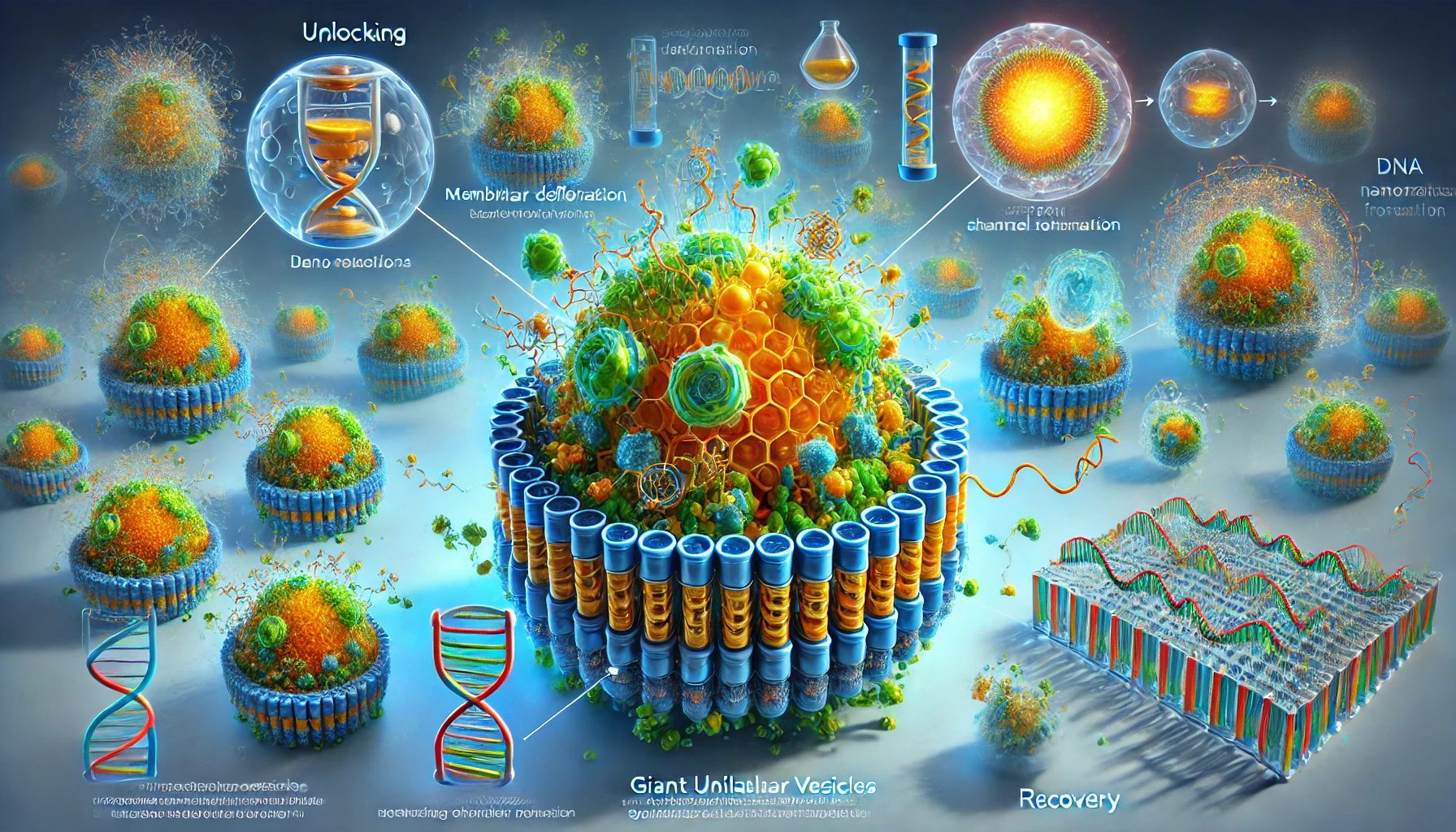
In a breakthrough study published in Nature Materials, scientists at the University of Stuttgart have unveiled an innovative approach to manipulating synthetic cells by leveraging reconfigurable DNA nanorobots. This research bridges the nanoscale and microscale worlds, offering a sophisticated method to reshape cell membranes and create functional synthetic channels, potentially revolutionizing synthetic biology. The Role…